



Good day, dear readers!
In today’s article, we’ll take a look at spinal conditions like osteochondrosis, along with its symptoms, causes, types, diagnosis, treatment, and prevention.so...
What is osteochondrosis?
osteochondrosis– A disease of the spine characterized by degenerative dystrophic damage to the intervertebral discs and then to the vertebral body tissue itself.
The main symptom of osteochondrosis is neck or back pain.Other symptoms include muscle wasting, sensory impairment, and internal organ dysfunction.Depending on the location of the pathological process, they differentiate between cervical, thoracic and lumbar osteochondrosis.If this disease and its treatment do not receive the necessary attention, the process of spinal damage will become irreversible.
In the English-language literature, the term "osteochondrosis" refers to a group of disorders of the musculoskeletal system, such as osteochondrosis.
The main factor or cause of osteochondrosis is uneven load distribution on the spine, which occurs when one hand or shoulder carries heavy objects (such as schoolbags, backpacks), sits in an incorrect posture for a long time, and rests on an uneven mattress or pillow at night.Other factors may include a sedentary lifestyle, obesity, injury and flat feet.
All of the above conditions can lead to year-round pain in the cervical, thoracic, or sacral spine.
According to statistics, 40% to 90% of the world's population suffers from osteochondrosis, mainly among those aged 30-35.The disease develops in teenagers under adverse conditions, most commonly caused by carrying heavy, uncomfortable backpacks, especially shoulder backpacks, uncomfortable shoes and injuries.
Development of osteochondrosis
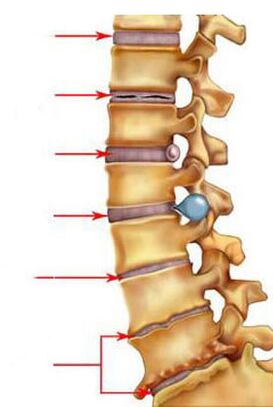
The development of osteochondrosis is divided into 4 different stages (degrees):
Osteochondrosis stage 1.It is characterized by a pathological process in the nucleus pulposus of the intervertebral disc - the occurrence of dehydration, followed by a decrease in the height of the intervertebral disc.At the same time, cracks begin to appear in the annulus fibrosus.During this stage, patients usually feel no changes.Discomfort may occur when sitting in unusual positions or actively exercising.
Stage II of Osteochondrosis.As the disc height decreases, the distance between adjacent vertebrae also decreases, and the spinal muscles and ligaments begin to sag slightly.This process causes hypermobility of two adjacent vertebrae, causing them to slip and/or shift.Spondylolisthesis develops.Due to the displacement of the vertebrae, the patient experiences real discomfort under certain loads and sometimes pain in the pathological area.
Osteochondrosis stage 3.It is characterized by the formation of intervertebral disc prolapse and herniation, and sometimes subluxation and articularization of the intervertebral joints.Patients may experience stiffness in certain movements, tingling in their limbs, and sometimes numbness.With third-grade osteochondrosis, pain already occurs in the back, neck, and tailbone areas, depending on the location of the disease.
Osteochondrosis stage 4.The body is working to correct the excessive movement of the vertebrae and normalize the function of the spine.At the junction of the vertebrae and the disease, new bone structures - osteophytes - grow on each vertebra, and when they form in unnecessary places, they can cause microtrauma to the nerve roots and sometimes to adjacent vertebrae.Fibrous ankylosis may begin in the discs and joints.The moving parts of the vertebrae become overgrown and become wall-like.In this case, the main symptoms of osteochondrosis are minimized and sometimes barely noticeable.
symptoms of osteochondrosis
The main symptoms of osteochondrosis are back or neck discomfort and pain.The severity of pain and other accompanying symptoms of this disease depends on the degree (stage) of osteochondrosis.
Of course, due to pathology of the intervertebral discs, hernias, growths on the vertebrae (osteophytes), a large number of diseases can occur, such as circulatory disorders, compression of nerves, irritation and interference with the normal functioning of the spinal cord, swelling and even fibrosis of the structures surrounding the vertebrae.All of these conditions contribute to the broad spectrum of clinical manifestations of the disease and present with a large number of different symptoms, making it difficult to make a correct diagnosis and initiate appropriate treatment without a thorough diagnosis of osteochondrosis.
However, let's consider the main symptoms of osteochondrosis:
- Pain in the back, neck, waist, shoulders and even ribs;
- Discomfort during certain movements, lifting things, back stiffness;
- numbness in the extremities (arms and/or legs);
- Pain and chills in arms and legs;
- muscle spasms;
- Reproductive organ dysfunction;
- Headache, dizziness;
- Pain in the heart area;
- sensory impairment;
- Muscular hypotension;
- Increased fatigue and sometimes eye strain.
In addition, depending on the area of the spine affected by osteochondrosis, the following symptoms can be distinguished:
Cervical osteochondrosis.The main symptoms are arm and shoulder pain, headache, dizziness, spots or spots in front of the eyes, and noise in the head.These signs may also indicate the presence of vertebral artery syndrome, which may also lead to complications of myocardial and myocardial vascular function if other diseases of the myocardium and myocardial blood vessels are present.
Thoracic osteochondrosis.Pain in the chest and heart area and respiratory discomfort are the main symptoms.
Lumbosacral vertebrae osteochondrosis.Mainly low back pain, radiating to the legs or pelvic organs.Sexual dysfunction.
Complications of osteochondrosis
If osteochondrosis is left untreated and allowed to progress, it may lead to the development of the following diseases and pathologies:
- Herniated disc (bulging spine);
- protrude;
- Kyphosis;
- Radiculitis;
- Salt deposits in the intervertebral spaces;
- spinal cord stroke;
- weight loss and atrophy of the limbs;
- Leg paralysis
Causes of osteochondrosis
The causes of osteochondrosis are not completely understood, so let's consider the most common of them:
- Mechanical injuries to the back (spine);
- The body is overworked and tired;
- neurasthenia, stress;
- Metabolic disorders, poisoning;
- Frequently stay in places with high vibration;
- genetic predisposition;
- Sedentary lifestyle, sedentary job;
- Poor posture in childhood;
- Overweight, obesity;
- flatfoot;
- Wearing uncomfortable shoes (too tight, high heels);
- Resting at night on an uncomfortable bed - mattress, pillow;
- Frequent dehydration;
- Malnutrition, vitamin deficiency;
- smoking;
- Pregnant.
Classification of osteochondrosis
The classification of osteochondrosis is very diverse because the disease itself is not fully understood.
Let's focus on the most popular ways of classifying this disease.
I differentiate between osteochondrosis:
By localization:
- Cervical Area©
- Chest (Th or D)
- Lumbar vertebra (L)
- Sacral area (S)
According to clinical manifestations:
1. Cervical Spine Level©.
1.1. Reflex syndrome.
- neck pain;
- Neck and cranial pain;
- Cervicobrachial pain is associated with vegetative vascular, neurodystrophic, or muscle tone manifestations.
1.2. Nerve root syndrome.
- Discogenic lesions of the cervical spine.
1.3. Nerve root vascular syndrome.
2. Thoracic plane (Th or D).
2.1. Reflex syndrome.
- Chest pain with vegetative visceral, neurodystrophic, or muscle tone manifestations.
2.2. Nerve root syndrome.
- Discogenic lesions of the thoracic root.
3. Lumbosacral plane (L, S).
3.1. Reflex syndrome.
- lumbago (low back pain);
- low back pain;
- Sitting pain is accompanied by vegetative vascular, neurodystrophic, or muscle tone manifestations.
3.2. Nerve root syndrome.
- Discogenic injury to the base of the lumbosacral region.
3.3. Nerve root vascular syndrome - nerve root ischemia.
Diagnosis of osteochondrosis
Diagnosis of osteochondrosis includes the following tests:
- medical records;
- X-ray examination (X-ray);
- Myelography;
- Neurological examination.
Additionally, they may assign:
- Computed tomography (CT);
- Nuclear Magnetic Resonance (NMR);
- Magnetic resonance imaging (MRI).
Treatment of osteochondrosis

Treatment of osteochondrosis involves the use of a series of measures that must be carried out over a considerable period of time (1-3 months + approximately 1 year of recovery), to which many patients respond very vaguely.Therefore, it should be noted that by indirectly following the advice of the attending physician, the patient's prognosis for recovery is slim.
Self-medication often becomes another problem in the management of osteochondrosis.The fact is that, as already written earlier in this article, the clinical picture of this disease is rather vague and widespread.Without a diagnosis, patients begin choosing medications to treat their pain and continue with their daily lives after the pain is eliminated, while the disease continues to progress.
Important!Prompt consultation with your doctor, a thorough health diagnosis, and strict compliance with all recommendations from your treating physician can increase a positive recovery prognosis!
There are two main methods of treatment for osteochondrosis: conservative treatment and surgical treatment.In addition, there are general recommendations for osteochondrosis treatment, such as diet and rehabilitation.
Conservative treatment of osteochondrosis
Conservative treatment of osteochondrosis aims to relieve pain, normalize the function of the spine and its components, and prevent further degenerative changes in the body's "axis".
Conservative treatment of osteochondrosis includes:
Medication.It is used to relieve pain and inflammation of the tissues that make up the spine and normalize metabolic processes.
To relieve pain and inflammation, various therapeutic blockades are also used.Additionally, they help reduce muscle tension syndrome.Therapeutic blocks include: trigger point blocks, as well as intraosseous, facet, paravertebral, and epidural blocks.
physiotherapy.It is used to relieve pain and enhance the effects of medications and during recovery.Treatment is performed using ultrasound, laser, magnetic field, low-frequency current, etc.
Physiotherapy (physical therapy), exercise therapy.A specially selected dose of exercises aimed at correcting muscle fascicles, strengthening muscles, correcting posture, normalizing the function of muscle tissue and its flexibility, reducing pressure on nerve roots and preventing possible complications of the disease.All this is achieved by normalizing the metabolism and nutrition of the disc, normalizing blood circulation, restoring the distance between the disc and the vertebrae, and distributing the load throughout the musculoskeletal system.
massage.Used to improve blood circulation, relieve stiffness and tension in muscle tissue, and improve overall health.
Hydromassage.Helps normalize blood circulation, metabolism, increase muscle tissue tension, and normalize the function of the nervous system.It involves massaging the body using a targeted flow of water with a certain pressure.True, in recent years hydromassage has gained popularity by applying air bubbles to the body in specially equipped bathtubs or pools.
Manual therapy.It is used according to individually selected procedures, targeting the musculoskeletal system.Helps improve blood and lymph circulation, metabolism, mobility of the musculoskeletal system, strengthens the immune system and prevents possible complications.
Extension (traction) of the spine.It is used with the help of special equipment to increase the intervertebral space and correct the structure of the spine, often minimizing or completely eliminating pain.
The combination of the above methods has good curative effect in the treatment of osteochondrosis.
Drugs to Treat Osteochondrosis
Treatment options for osteochondrosis include:
- anti-inflammatory drugs.
- Antispasmodics.
- Antioxidants:Vitamin C, Vitamin E.
- blood microcirculation stimulant.
- Ways to Prevent Further Degeneration of Cartilage Tissue.
osteochondrosis diet
For osteochondrosis, you need to eat small meals 6 times a day and drink at least 1.5 liters of water a day.
What can you eat if you have osteochondrosis:Dairy products, lean meats (chicken, beef), jelly, fish jelly, aspic, fresh vegetables (tomatoes, cucumbers, onions, carrots, beets, peppers, cabbage, celery, broccoli), fruits, avocados, nuts, sunflower seeds, spinach, mushrooms, cereals.
Foods that need to be minimized in the osteochondrosis diet:Grapes, beans (peas, beans, etc.), flour products, hot seasonings, sugar, salty foods, broths, and bacon.
It is better to steam food because... With this method of preparation, the product retains vitamins and trace elements to the maximum extent possible.
Try dressing your salad with olive oil.
Surgical treatment of osteochondrosis
Surgery may be used to treat osteochondrosis when conservative methods fail.Prescribed by the attending physician or a committee of physicians.It can also be used for severe injuries to the spine and its components.
Treat osteochondrosis with folk remedies
important!Always consult your doctor before using folk remedies to treat osteochondrosis at home!
Treatment of osteochondrosis with ready-made herbal preparations
Comment by Herbalist A.A. Malgin: Herbal treatments (herbal medicine) have some wonderful advantages, such as:
- Herbal medicines eliminate the causes of diseases,
- Herbal medicines have few contraindications (usually individual intolerance),
- Herbal treatments have minimal side effects,
- Herbs contain a large number of vitamins and other useful substances that, in addition to treating diseases, contribute to the health of the entire body,
- Affordability.
Herbalists offer ready-made solutions that have taken into account the specific ingredients of the collection, dosage, order, etc.These courses are developed by medical experts based on their years of experience.
Other folk remedies against osteochondrosis
Dough.Prepare some dough with 300 g of rye flour and leave it at room temperature for a few days.Drink a glass of milk and rub turpentine on the painful areas of your back.Then wrap the dough with gauze and apply it to the sore area.Wrap it in cellophane, then wrap it in a scarf or towel.You may feel a burning and stinging sensation in the area after some time, but try to tolerate it.Perform this procedure every other day.Use each batch of dough no more than 3 times.
Sabernik.Make a tincture of five leaves.Before going to bed, rub the painful area on your back with the prepared tincture and tie a scarf around it.Additionally, you can take a few drops of five leaf tincture before bed.
Osteochondrosis ointment.Add 1 tablespoon to container.1 spoon of flour, 1 egg, 100 g of butter and 1 tbsp.A spoonful of vinegar, mix all ingredients thoroughly and leave in a dark place for 2 days to soak.Then remove any foam that forms in the mixture.Mix the mixture thoroughly again and rub the resulting ointment onto the sore area.
radish.Mix 300 ml of radish juice, 200 g of honey and 100 ml of vodka.Rub the resulting mixture on your back.This folk remedy also helps treat radiculitis and rheumatism.
Prevent osteochondrosis
To prevent pathological changes in the spine, follow the following recommendations:
- Maintain an active lifestyle – swimming, running, morning exercise, cycling;
- Pay attention to your posture when sitting for long periods of time at work - keep your back straight and shoulders relaxed;
- Only perform sedentary work in a comfortable chair or armchair that provides spinal support;
- When working sedentary, exercise and warm up regularly;
- Sleep on a comfortable (orthopedic) mattress or pillow;
- Try to avoid carrying heavy objects. If you carry them, lift them slowly;
- Perform exercises to stay in good shape and strengthen your abdominal muscles;
- Wear comfortable shoes and avoid high heels, especially during pregnancy;
- Try to eat foods rich in vitamins and trace elements.
Which doctor should I consult for osteochondrosis?
- chiropractor;
- Neurologist;
- Osteopath;
- Orthopedic surgeon.